Turning a 30% failure rate into a success story.
Dermstore customers with HSA/FSA Flex cards were experiencing a 30% failed-payment rate. A self-initiated, research-backed redesign, pitched to C-suite, validated with users, and signed off for development.
Client
Dermstore · THG
Year
2026
Discipline
Enterprise UX
Role
UX research · Strategy · Stakeholder management
0%
Projected failure reduction
0+
Research participants
0
Used wrong section
Overview
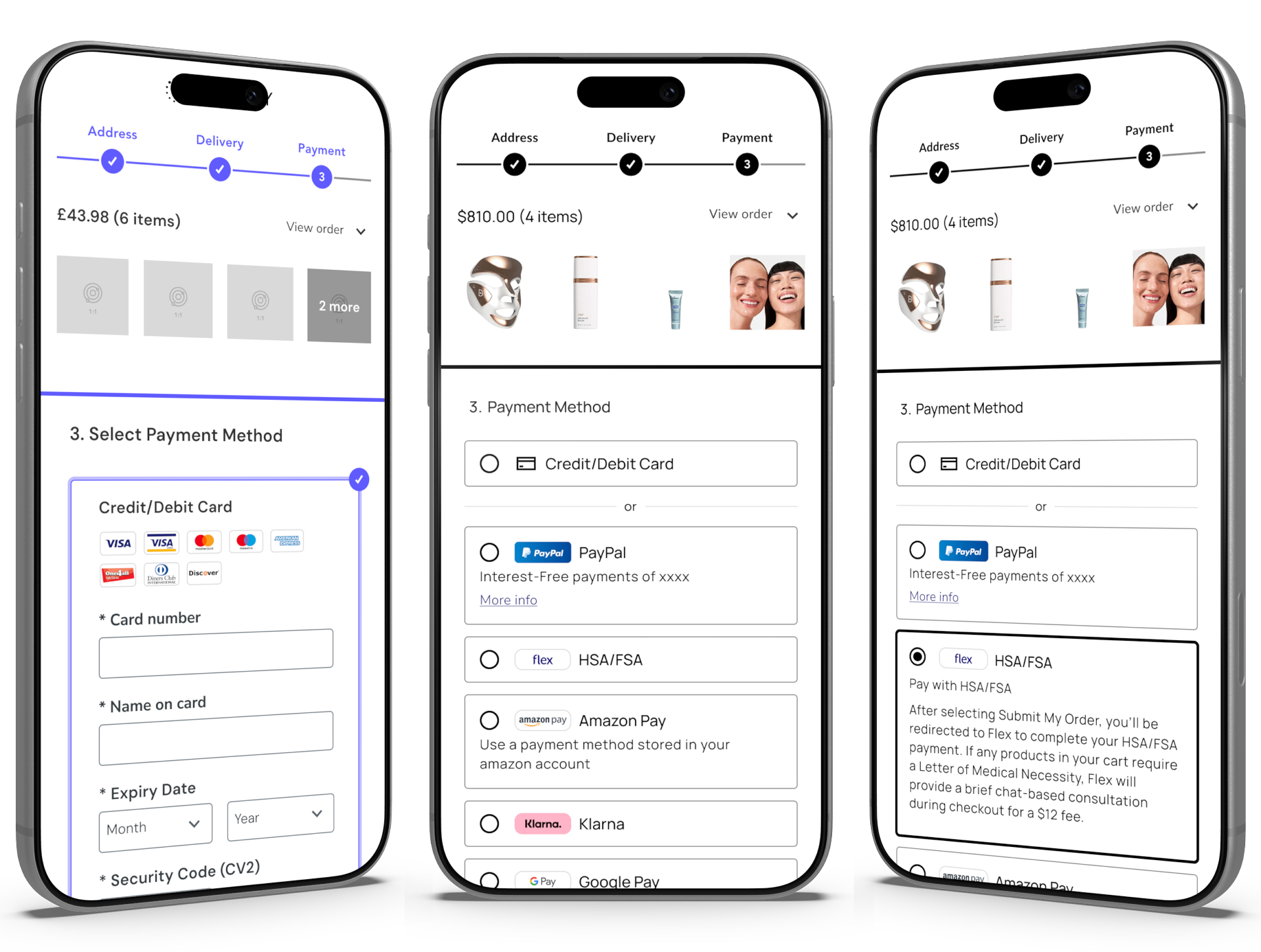
Dermstore customers with HSA/FSA Flex cards were experiencing a 30% failed payment rate because they couldn't find where to use them. The checkout presented credit card fields immediately, causing users to overlook alternative payment methods. I took ownership: investigated the scope, built the business case, and proposed a research-backed solution to internal stakeholders and Dermstore's C-suite.
Challenge
01
The problem
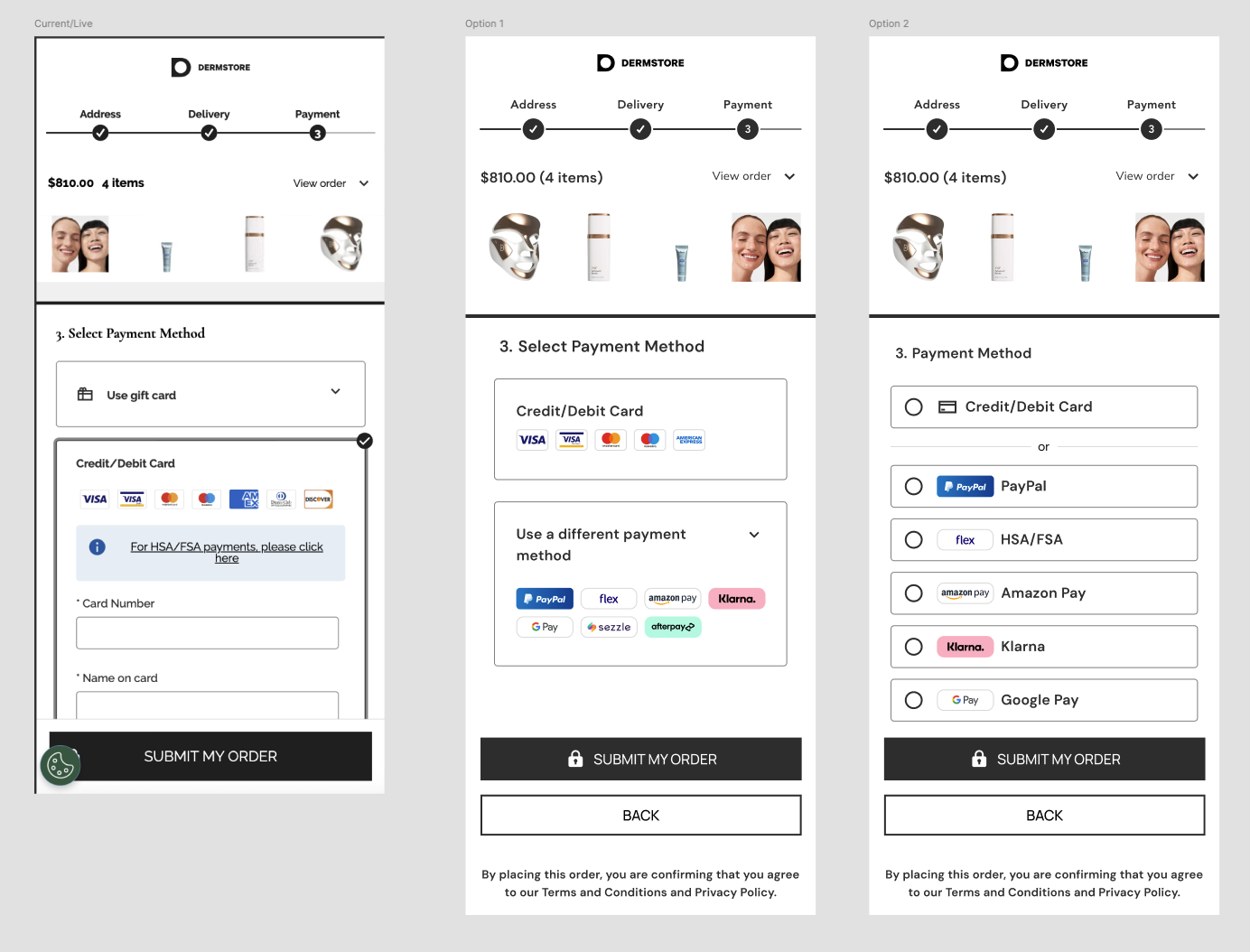
Customers were entering HSA/FSA cards into standard credit/debit fields. Users were defaulted into the credit-card path before they could even see other options.
02
Business impact
- 30% of HSA/FSA payment attempts failing
- Lost revenue from abandoned transactions
- Poor experience for health-conscious shoppers
- Increased customer-service burden
03
Root cause
Progressive disclosure, showing all payment methods first, then revealing the relevant input fields, was the answer, but we needed to prove it before asking for development resources.
What I did
- 01/ 05
Ran competitive analysis across 11+ sites including FSAstore.com, Walgreens, CVS, Stripe, Shopify and Amazon to understand progressive-disclosure patterns and payment hierarchy.
- 02/ 05
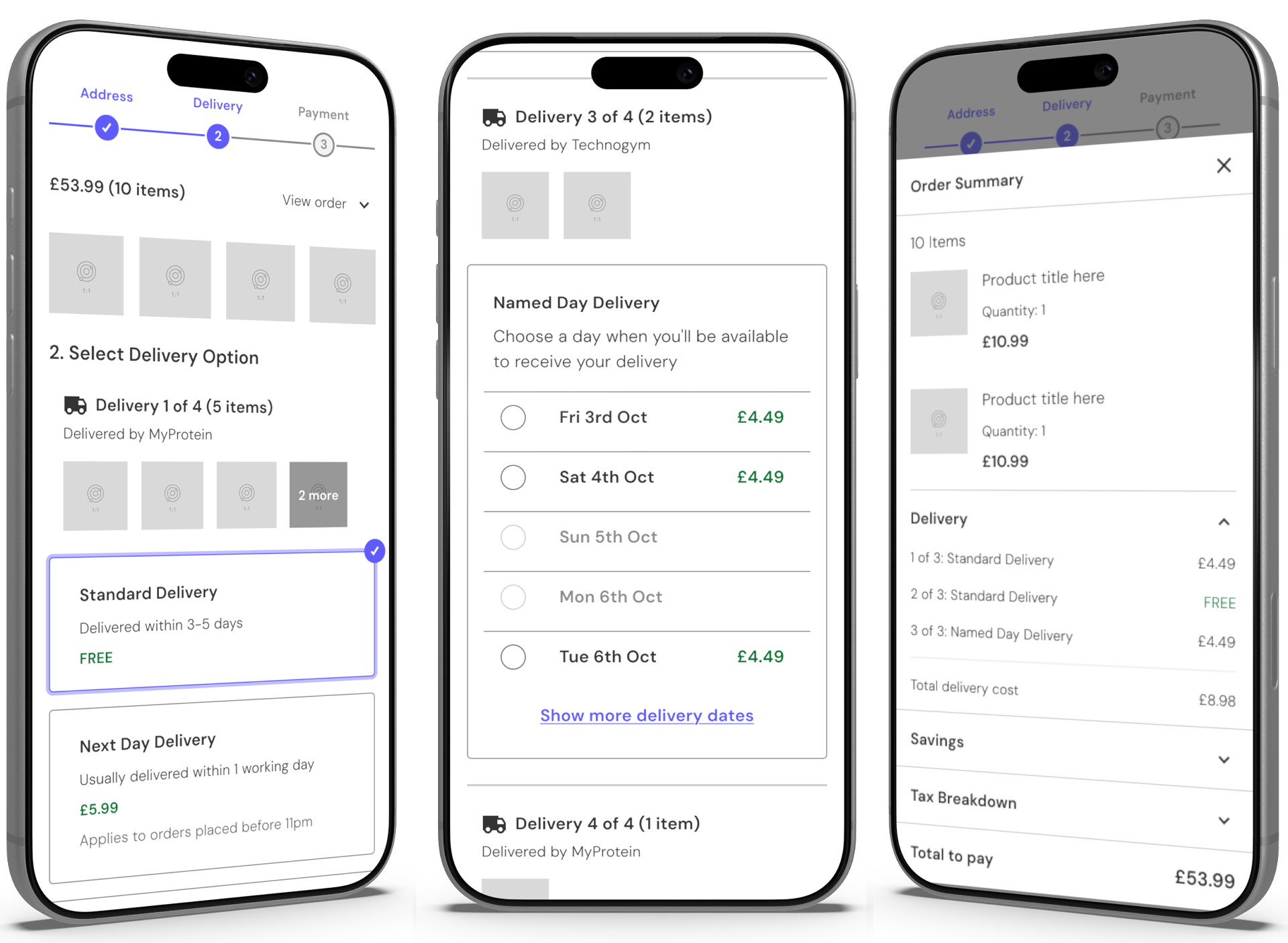
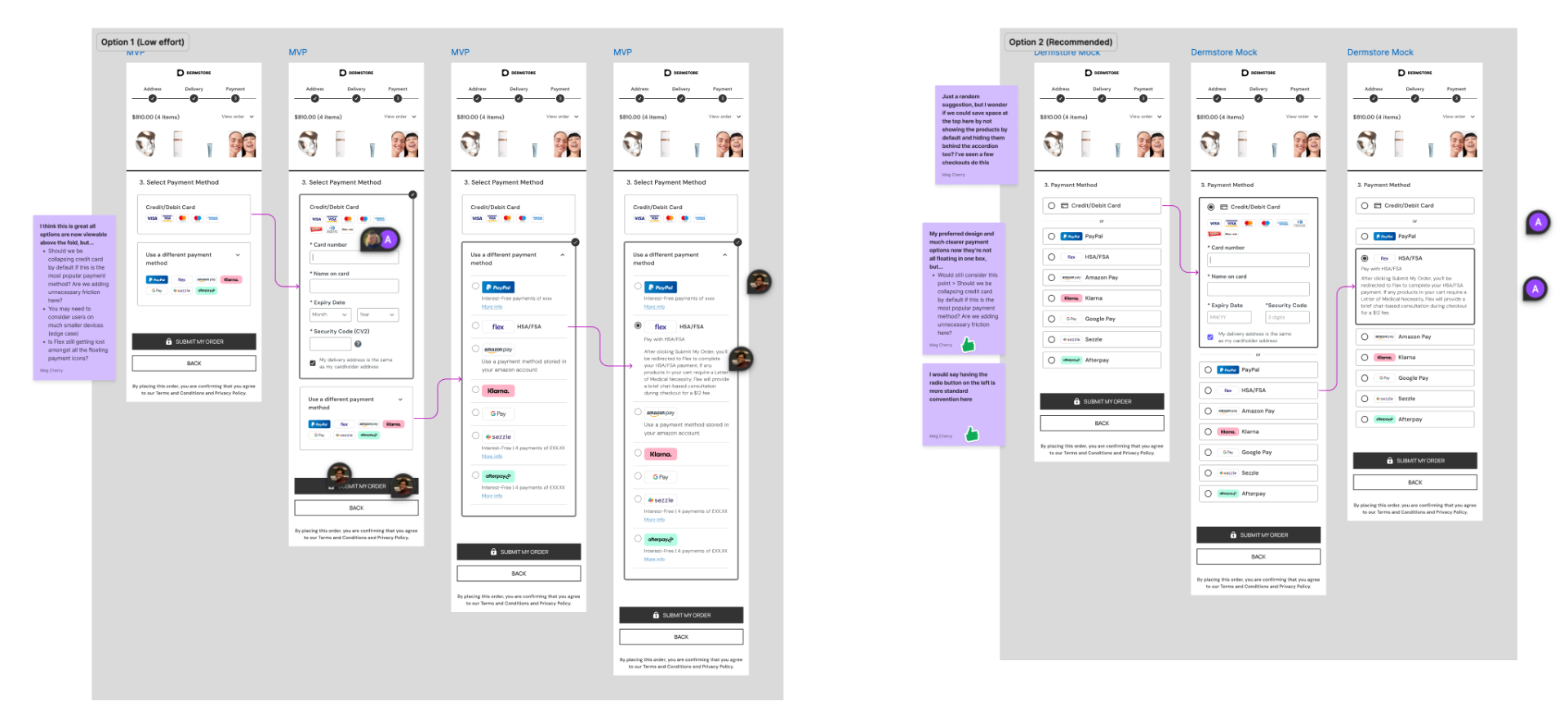
Designed two solutions, Option 1 (MVP, collapse credit-card section) and Option 2 (recommended, all payment methods upfront). Presented both to Dermstore C-suite including the President of THG US Retail and VP of Ecommerce.
- 03/ 05
Commissioned two concurrent research studies with 100 real HSA/FSA cardholders (quant) and 5 users (qual) through PlaybookUX. Option 2 won decisively, zero participants entered card details in the wrong section.
- 04/ 05
Designed 8 complete checkout journey scenarios covering guest checkout, logged-in users with 1–3 saved cards, gift cards, account credit and edge cases.
- 05/ 05
Discovered a secondary UX issue during research: Letter of Medical Necessity fee clarity needed addressing at basket level, not checkout. Documented as follow-on work.
Outcome
Roadmap confirmed
Director of Engineering confirmed the project for Q2 2026 big-room planning.
Research validation
Option 2 won decisively in both studies. Users appreciated being presented with all payment options first: "This makes it obvious which payment method to choose."
Client response
Dermstore C-suite preferred Option 2 because it solves the root cause rather than applying a temporary fix.
Projected impact
Targeting a 20% reduction in failed payments, improved CX, reduced CS contacts and increased conversion for a critical segment.
Services delivered
More of my work